




Gynaecological cancers are cancers that start in the female reproductive system. Every year, more than 22,000 women in the UK — around 60 diagnoses a day receive a diagnosis of a gynaecological cancer. They include five main types:

A swollen tummy or feeling bloated, pain or tenderness in the lower abdomen or pelvis, feeling full quickly when eating and needing to urinate more often or more urgently.
Abnormal vaginal bleeding (particularly bleeding after the menopause). Other symptoms include bleeding between periods, unusually heavy periods, and persistent vaginal discharge. About 80% of endometrial cancer cases occur after menopause, but younger women can still be affected.
May cause no symptoms at all (which is why regular screening is so vital). When symptoms do appear, they can include bleeding between periods, after intercourse, or after the menopause, changes in vaginal discharge, pain during intercourse, or lower abdominal discomfort.
Symptoms include a persistent itch, pain or soreness, a lump or ulcer that does not heal, thickened or discoloured patches of skin, or bleeding from the vulva.
About 70% of ovarian cancers are diagnosed in advanced stages when the survival rates are far lower. Surprisingly between 10-25% of ovarian cancers may have genetic links including BRCA gene mutations, Lynch syndrome and possible epigenetic changes.
Don’t normalise your red flag signs and ask your gynaecologist about early detection tests of CA125, HE4 and Pelvic scans on regular basis. Be part of our campaign “I am ovarian smart” and protect your ovarian health.
Cervical cancer screening uptake in the UK is experiencing a long-term decline, with around 30% of the eligible women in England not up to date with their screening.
Cervical cancer is becoming increasingly preventable, and its incidence has fallen since the introduction of adolescent HPV vaccination. Be part of our campaign “I am not cervical shy” and attend your smear test.
Uterine (womb) cancer is on the rise and the rate of endometrial cancer diagnoses in England has increased by 41% since 2001. This is strongly linked to the growing number of adults living with obesity, as excess body weight is a major risk factor. Data suggests that approximately 34% of uterine cancer cases, about 3,000 out of 9,000 are attributable to obesity.
Be part of our campaign “I am uterine conscious” and do not miss the earliest warning signs.
If you've been told your heavy periods, pelvic pressure, or unexplained exhaustion are just part of being a woman, please know this: you don’t have to accept suffering as normal.
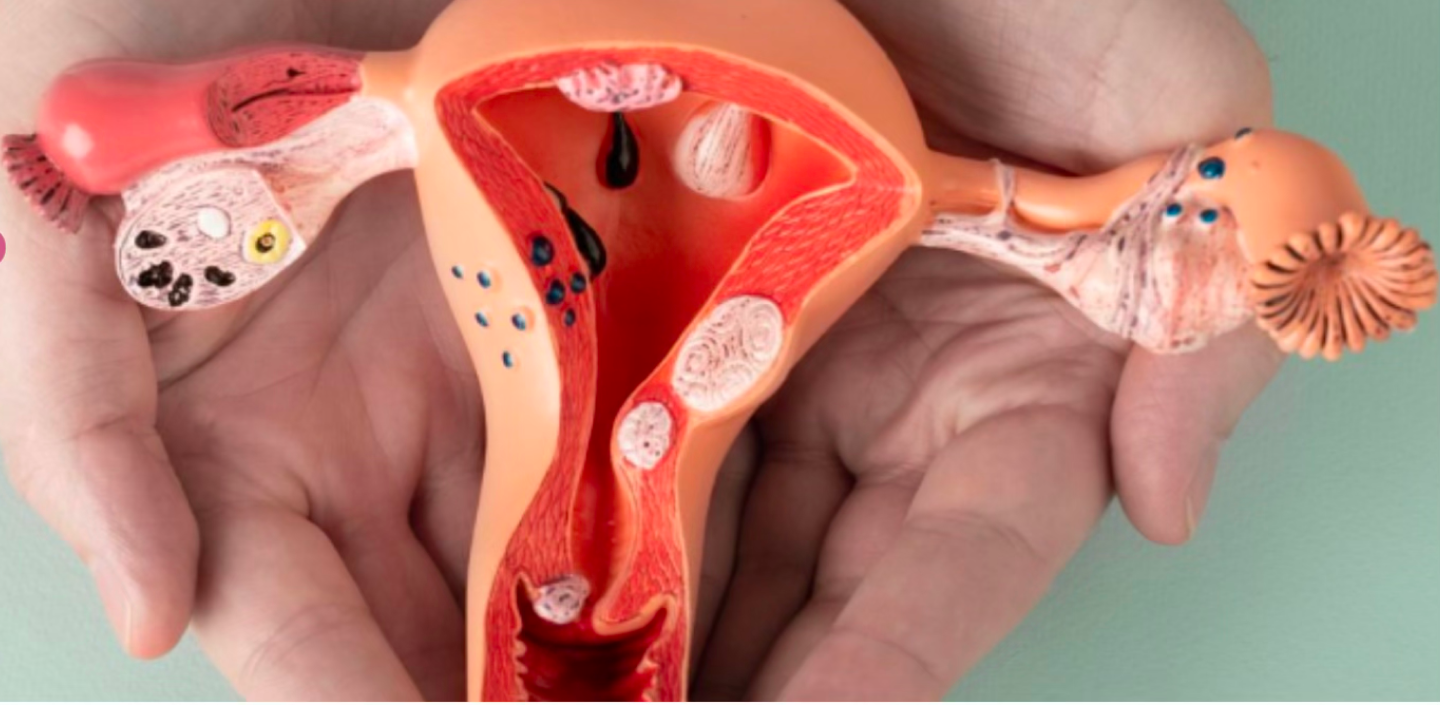
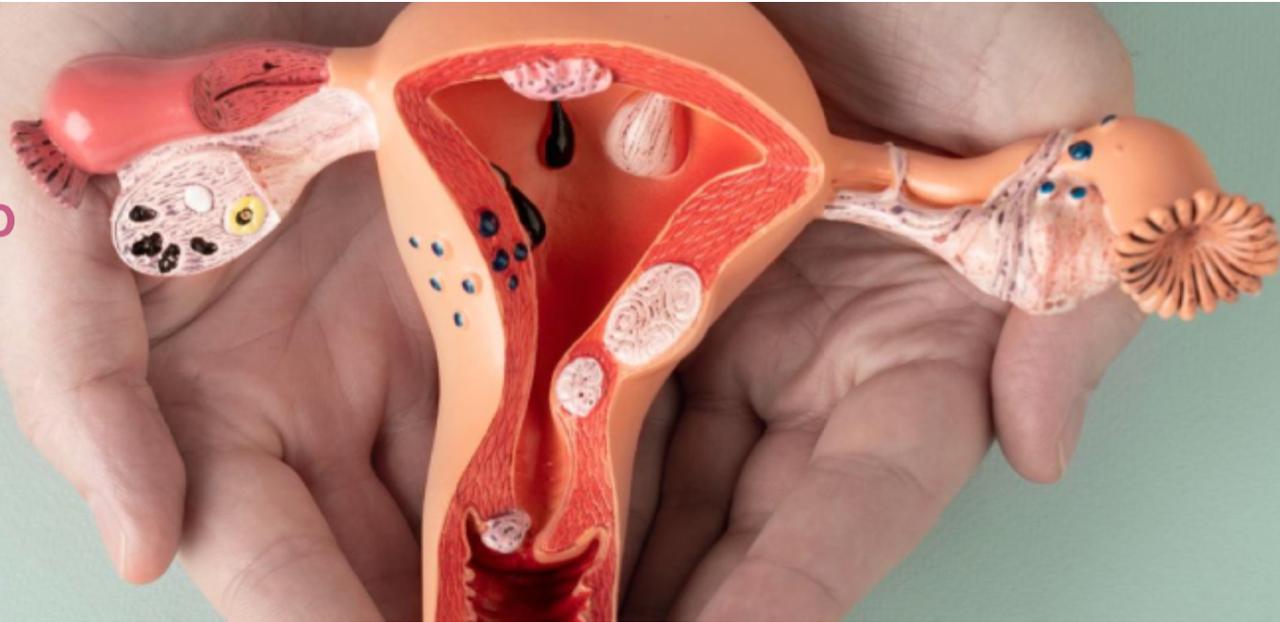
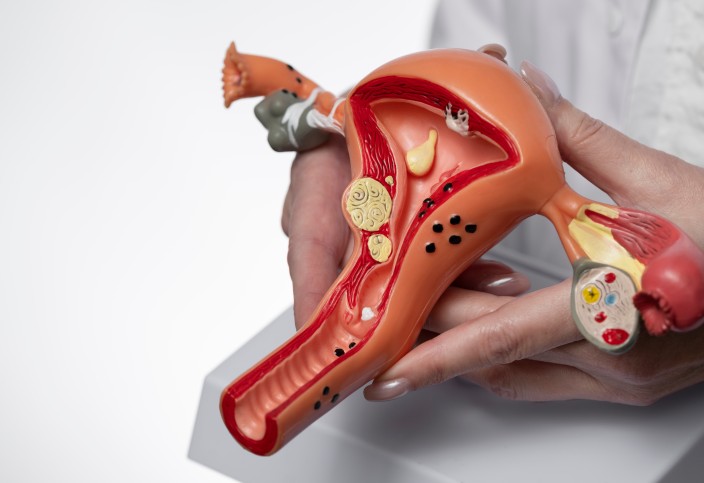
Uterine fibroids (also called leiomyomas) are non-cancerous growths that develop in or around the womb. Think of them as benign lumps of muscle and tissue that vary in size from as tiny as an apple seed to as large as a melon. They are incredibly common, affecting up to 1 in 5 women in their thirties and forties, and some research suggests up to 80% of women will develop fibroids by the age of 50.
Fibroids can grow in different locations inside the uterine cavity, within the uterine wall, or on the outer surface of the womb. Their location, size, and number determine what kind of symptoms you might experience, and whether they affect your fertility or quality of life.
The exact cause remains unknown, but we do know that oestrogen and progesterone the very hormones that regulate your menstrual cycle encourage fibroids to grow. This is why fibroids typically shrink after menopause, when hormone levels drop. Some key risk factors include:
Many women with fibroids have no symptoms at all — but if you do, these are the most common signs:
Don’t let others normalise the conditions that deserve medical attention. What is not treated must be monitored. Researchers want us to now classify fibroids into ‘usual type’ and ‘variable type’ fibroids, with definite attention being paid on the variable type fibroids which are more likely to cause illness and significant gynaecological health concerns. You should take steps to know more about your fibroids if you have been told that you have them.
If you have been living with difficult periods, pelvic pain, or feeling exhausted without a clear reason, you are not alone — and you are not imagining it.
Endometriosis is a common condition that affects about 1 in 10 women and yet many people have never heard of it. Put simply, it happens when cells very similar to the ones that normally line the womb (uterus) are found growing in other areas of the body, most often within the pelvis around the ovaries, fallopian tubes, or the bowel and bladder. Like the lining of the womb, these cells react to your monthly cycle, building up and then breaking down. But unlike a period, this blood has nowhere to leave the body, which can cause inflammation, irritation and, over time, may lead to scar tissue, cysts or adhesions.
The exact cause is not fully known, and there is no single explanation. Researchers believe it is likely a combination of several factors: genetics (it often runs in families), retrograde menstruation (when some womb lining flows backwards through the fallopian tubes), and possible immune system factors. But the good news is that treatment is not reliant on knowing the cause; what helps most women is getting an accurate diagnosis and a personalised care plan.
Some women have very noticeable pain; others may have no symptoms at all. The most common signs include:
A striking number of women experience significant symptoms for years before receiving an answer. According to recent data from the charity Endometriosis UK, the average time from first seeing a doctor about symptoms to receiving a diagnosis has now risen to 9 years and 4 months— even longer than it was a few years ago. Almost two in five people visit their GP ten times or more before endometriosis is even considered, and more than half have attended A&E with their symptoms, often being sent home without treatment. This is why gynaecologists sometimes call the condition Endomysterious — not because nothing can be done, but because the journey can be so complicated and unnecessarily long.
Ovarian cysts are fluid-filled sacs that develop on or inside one of your ovaries. Think of them as small, often harmless blisters that range in size from a pea to an orange or sometimes larger. Most cysts are completely benign and come and go with your menstrual cycle. In fact, most women will develop at least one cyst during their reproductive years without ever knowing it. But some cysts grow large, rupture, twist an ovary, or cause persistent symptoms that interfere with your daily life.
Cysts fall into different categories. Functional cysts (follicular or corpus luteum cysts) are directly tied to your monthly cycle and usually disappear on their own. Pathological cysts (like dermoid cysts, cystadenomas, or endometriomas) are less common and may need treatment. Their type, size, and location determine whether they quietly resolve or demand attention.
The short answer: your ovaries are designed to grow small cysts each month as part of ovulation. Most of the time, they rupture or shrink naturally. When that process goes amiss, a follicle doesn’t release an egg or doesn’t dissolve afterward a problematic cyst can form. Other contributing factors include:
You know your body better than anyone. When a healthcare provider says, “it’s probably nothing” or “just watch and wait,” that can be appropriate – but not when you’re suffering month after month. What is not treated deserves to be monitored, and what causes pain deserves to be named.
Ovarian cysts are common, but common does not mean you have to accept chronic discomfort, anxiety over sudden pain, or fear about your fertility. You should choose to get answers.
A ‘knowledge-based scan” by gynaecologist is guided by clinical judgement rather than just a technical skill and can explain findings, answer questions and discuss treatment. We offer pelvic scan (ultrasound) performed directly by a specialist gynaecologist, which is fundamentally different from a standard scan. While utilizing the same ultrasound technology, the expertise lies in the integration of skill and knowledge
A gynaecologist actively considers your unique medical history, symptoms, and examination findings. They don’t just capture images; they immediately interpret them through the lens of your specific clinical picture. Crucially, the findings are explained to you during or immediately after the scan for real time diagnosis and start of the management.
Laparoscopic surgery, often called keyhole surgery, has transformed gynaecological care. Instead of a large open incision, a tiny camera and specialised instruments are inserted through small cuts in the abdomen. This allows me to see your womb, ovaries, and pelvic organs in high definition and perform delicate operations with precision.
For many conditions that once required open surgery – such as large fibroids, deep endometriosis, ovarian cysts, or even hysterectomy – keyhole techniques now offer smaller scars, less pain, faster recovery, and better overall outcomes.
Mr Muglu performs both advanced laparoscopic surgery and complex open surgery. Why both? Because some complex cases – for example, very large fibroids, extensive endometriosis involving the bowel or bladder, or suspected cancer may still be best managed with an open procedure and not laparoscopic or robotic approach. His role is to choose the safest, most effective operation for you.
Over the years, Mr Muglu has built a reputation among his colleagues for handling the cases that others find challenging. Gynaecologists regularly refer their most complex patients to him, and he is frequently called upon by other hospital teams to assist with or take over difficult procedures. This trust from fellow doctors is something he carries with great humility, and it reflects a career dedicated to safe, high-quality surgical care.
Surgical safety is not just a promise – it is measured. The National Consultant Information Programme (NCIP) independently reviews outcomes for consultants across the UK. Mr Muglu’s surgical safety record is better than the national average for every single procedure recorded, making him an outstanding surgeon. That means, for the operations he performs, you are statistically safer in his care than the national benchmark.
When you are facing surgery for a complex condition, this is the kind of evidence that matters. It is not about boasting – it is about transparency and trust.
You may be considering surgery if you have:
If you have been told your case is complicated, or if you simply want the reassurance of a surgeon with advanced skills and a proven safety record, you can book with us. A consultation is the first gentle step – we will discuss your diagnosis, explore whether surgery is right for you, and explain exactly what to expect.
A woman’s body is not a static entity. It is a beautifully dynamic landscape that transforms across a lifetime, from the first whisper of menstruation in adolescence, through the reproductive years, to the hormonal shifts of perimenopause and beyond. Each phase brings its own strengths and its own vulnerabilities. Yet for too long, healthcare has treated these changes as a series of urgent problems to fix, rather than a continuous journey to support. The time has come to see women’s health through a new prism: the prism of prevention. This isn’t about fighting fires; it is about building a resilient, informed, and proactive partnership between woman and their gynaecologist.
Preventive gynaecology acknowledges the unique physiological reality of being a woman. When sexual activity begins, the body becomes more susceptible to viral and bacterial challenges that can alter the delicate ecosystem of our gynaecological organs. Then, during our reproductive prime, we become vulnerable to progressive conditions such as endometriosis, polycystic ovary syndrome (PCOS), fibroids, and pathological cysts. The statistics are sobering. Globally, PCOS affects an estimated 10–13% of women, with up to 70% remaining undiagnosed, exposing them to increased long-term risks of insulin resistance, type 2 diabetes, and obesity. Similarly, endometriosis affects roughly one in ten women of reproductive age, yet the average journey from first symptom to diagnosis can stretch from 8 to 12 years, nearly a decade of unnecessary pain and uncertainty.
Perhaps the most profound shift occurs with the arrival of perimenopause and menopause. The natural decline in oestrogen removes a key layer of protection, opening the door to a new set of health risks. Cardiovascular disease becomes a critical concern, emerging as the leading cause of death among women. Research from the UK Biobank shows that postmenopausal women have an estimated atherosclerotic cardiovascular disease risk of 3.75%, compared to just 0.81% in premenopausal women. The loss of oestrogen also accelerates bone loss with devastating consequences: in the UK, it is estimated that half of all women over 50 will break a bone due to osteoporosis. This condition, often called a “silent epidemic,” affects one in three women over 50, yet many remain unaware until a fracture occurs.
These risks are further compounded by our genetic blueprint. Epigenetic changes and inheritable mutations can, over time, drive serious conditions. For women with a BRCA gene mutation, the probability of developing breast cancer can reach up to 72%, and ovarian cancer up to 44%. These are not hypothetical dangers; they are tangible threats that can be identified and managed proactively.
Preventive gynaecology is a proactive, evidence-based partnership that goes far beyond the traditional smear test. It encompasses comprehensive well-woman exams, personalised genetic and lifestyle risk assessments, and age-appropriate screenings for cervical, ovarian, breast, uterine and bone health. It includes vital HPV vaccinations, which can prevent up to 90% of cervical cancers, and the consideration of risk-reducing surgery for those with high genetic predisposition of gynaecological cancers.
A preventive consultation is not an admission of a problem; it is an act of self-care and empowerment.
Adenomyosis is a condition where the tissue that normally lines your uterus (the endometrium) grows into the muscular wall of the uterus. Think of it as the inner lining invading deeper where it doesn’t belong like a plant’s roots growing into a concrete foundation. This causes your uterus to become bulky, thickened, and sometimes twice its normal size.
Unlike the temporary lining your body sheds each month during your period, this trapped tissue has nowhere to go. It continues to build up, break down, and bleed inside the muscle, leading to inflammation, pain, and heavy bleeding. Adenomyosis is often called a “great imitator” because it can feel like fibroids or endometriosis, but it’s a distinct condition.
We don’t know exactly why the endometrial tissue breaks through the uterine wall. Several theories exist, but no single cause explains all cases. What we do know is that adenomyosis is oestrogen-dependent—it grows and shrinks with your hormonal cycles and tends to improve after menopause (unless you take hormone replacement therapy). Contributing factors may include:
You know your body better than anyone. When a doctor says, “heavy periods and cramps are just part of being a woman,” that may be the most common answer—but it is not the right one. You do not have to arrange your life around bleeding and pain. You do not have to pretend that missing work, cancelling plans, or lying on the bathroom floor is normal.
Adenomyosis is often missed on ultrasound (about 30-50% of cases), but it can be seen with ultrasound scan with specialist gynaecologist or specialised imaging like MRI or diagnosed definitively after a hysterectomy. The good news is that treatment exists and you must seek it with the expert gynaecologist
Postmenopausal bleeding is exactly what it sounds like: any vaginal bleeding or spotting that occurs after you have reached menopause. So, if you are one year or more past your last period and you suddenly see blood, even just a few drops of pink or brown on toilet paper that is postmenopausal bleeding.
Think of it as a fire alarm. Most of the time, it is triggered by something benign (like a dry, thinning lining or a small polyp). But sometimes, it signals a problem that needs attention. The key rule in gynaecology is simple: menopause means no more periods. Any bleeding after that is not normal, no matter how light. However, in many cases (about 90%), the cause is not cancer. But you cannot know which category you fall into without an evaluation.
After menopause, your ovaries stop producing oestrogen, so the lining of your uterus (endometrium) becomes thin, fragile, and inactive. Bleeding happens when something disrupts that quiet state. Common causes include:
Postmenopausal bleeding is never “normal.” It does not mean you have cancer. Most women who go through testing find out they have a simple, treatable cause like atrophy or a polyp. But the only way to know is to be evaluated.
Many women feel embarrassed, frightened, or tempted to wait and see if the bleeding stops on its own. Please do not wait. Most causes become easier to treat and have better outcomes when caught early by your gynaecologist.